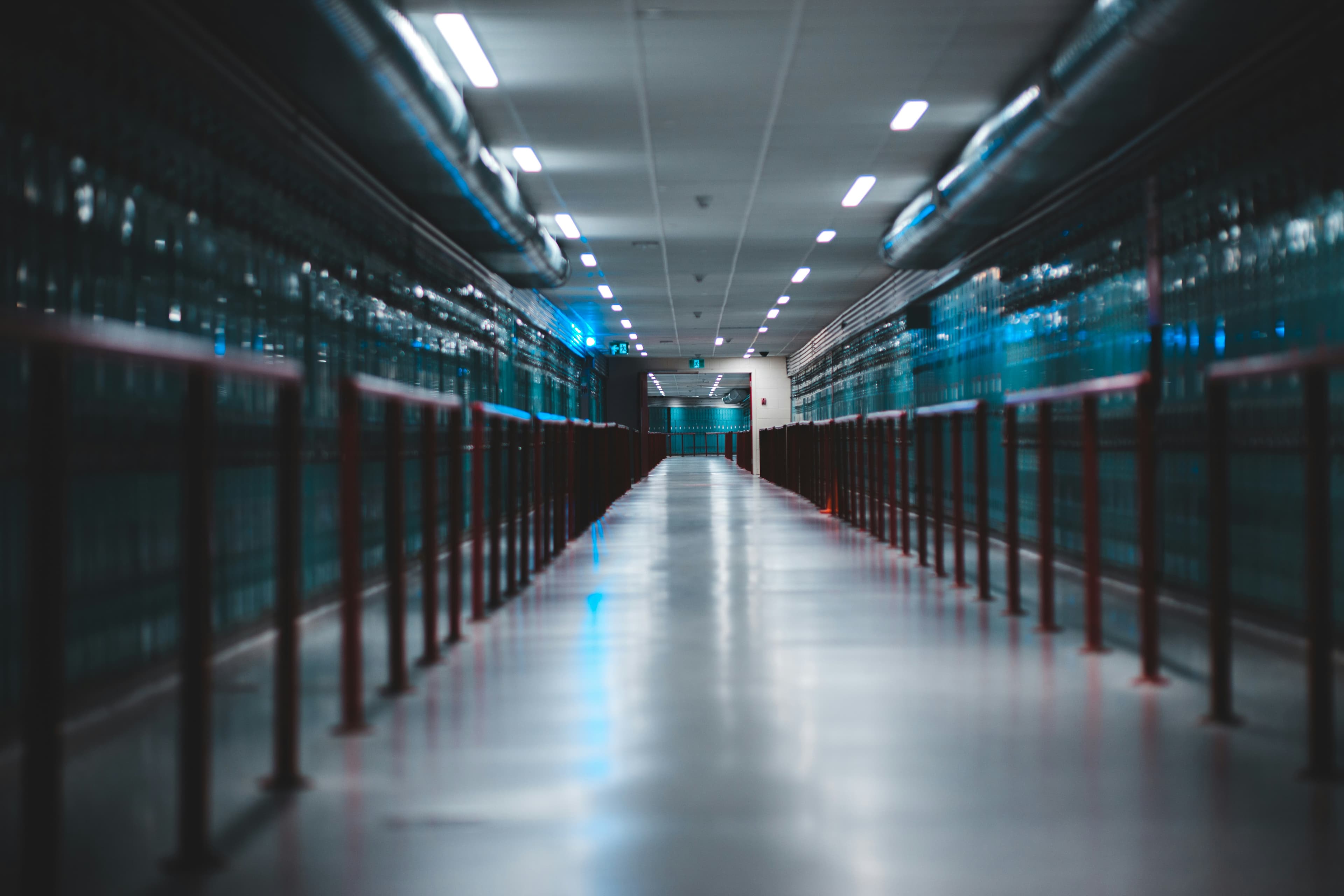
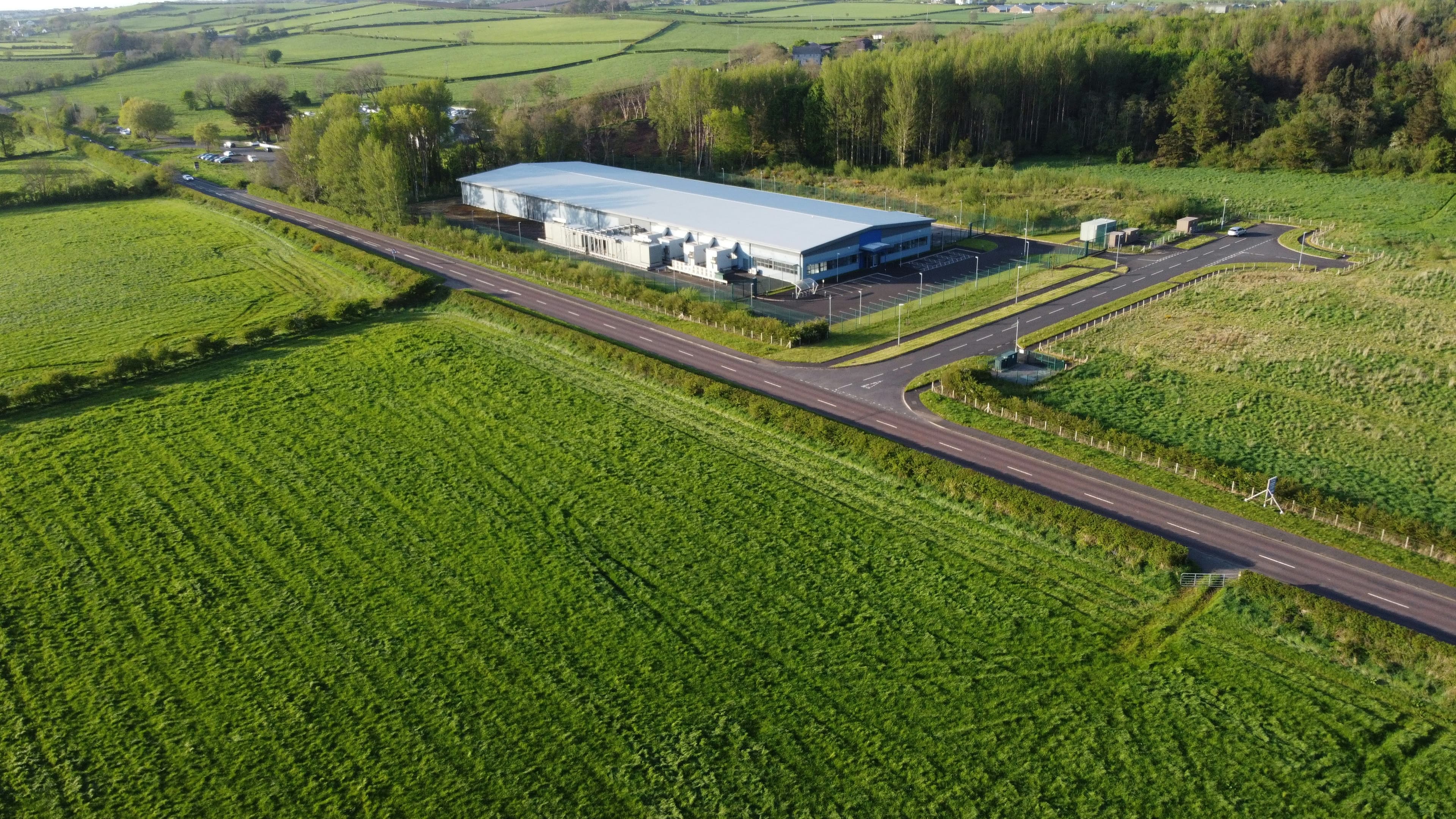
A June fire at the Lake Mariner data center in Somerset, New York exposed how tangled the accountability chain has become on a $3.2 billion AI buildout that involves four separate companies. Firefighters from the Barker Fire Department entered an unfinished building with no working alarm, no suppression system, and three dead hydrants, according to chief Steve Matisz, who said the safety data sheets his crew was legally entitled to see had reportedly burned up in the blaze. No one was hurt, and construction continued. What the fire revealed was structural: on a single 500-megawatt campus, no one entity clearly owns the ground-level obligations.
The corporate stack at Lake Mariner runs four deep. TeraWulf owns and operates the site on land leased from Somerset Operating Company, an entity owned by TeraWulf CEO Paul Prager. UK-based Fluidstack will run the facility. Google holds warrants for a future 14 percent equity stake and guarantees Fluidstack's lease payments. And Anthropic is among the AI companies whose demand the campus is being built to serve. TeraWulf told Ars Technica it is responsible for operational safety and emergency preparedness, including coordinating with local first responders.
TeraWulf chief strategy officer Kerri Langlais said the company implemented Knox boxes, additional hydrants, and safety data sheet go-bags following an after-action review with the county. When Matisz was reached in mid-August, he confirmed a Knox box representative had visited but said of the hydrants, "As far as I know, [they] are still dry… I haven't seen work done on them." Somerset town supervisor Jeffrey Dewart has been unable to get a meeting with TeraWulf's communications team, according to the report.
Key facts
- 01The Lake Mariner campus in Somerset, New York is a $3.2 billion AI data center buildout on a former coal mine on Lake Ontario.
- 02TeraWulf now projects 35 to 40 permanent jobs at full 500 MW buildout, versus 165 jobs and $85M in investment promised in 2019.
- 03Google holds warrants for a 14% equity stake and guarantees Fluidstack's lease payments; Anthropic is among the compute tenants.
- 04A June fire found no working alarm, no suppression system, and three dead hydrants; safety data sheets reportedly burned in the blaze.
- 05TeraWulf separately signed a 20-year, $19 billion direct lease with Anthropic for a Kentucky facility on July 6 — no Fluidstack, no Google.
The jobs math is the other headline problem. In a 2024 planning board presentation, TeraWulf's project manager put full-buildout employment at 35 to 40 people. That is a fraction of the 165 permanent jobs and $85 million in capital investment the Somerset Operating Company promised in 2019 when it applied for a power discount under the same project scope. The New York Power Authority reviews compliance annually and can adjust the benefits if commitments aren't met. Prager did not respond to a request for comment on the gap.
“Despite the scale of these projects and the utility demands, data centers do not deliver significant, long-term jobs”— Kathy Hochul, Governor of New York
New York Governor Kathy Hochul placed a moratorium on hyperscaler data center development in July and has been direct about the pattern. She told reporters she is challenging the industry to build in a smarter way. The critique is not about any single project — it is about a national buildout where multi-hundred-megawatt facilities routinely settle in with staff counts in the low double digits.
Pilar Thomas, a former deputy solicitor at the Department of the Interior who now teaches tribal energy law, framed the labor arc plainly. Construction crews of hundreds work for six to eighteen months, then depart. What remains, typically, is a skeleton operations team — at Lake Mariner, roughly three people post-construction, per the reporting.
The financial cost of the load, meanwhile, does not stay with the operator. Leah Stokes, a political scientist at UC Santa Barbara, noted that 24/7 industrial loads make the whole grid more expensive to run, and those costs get socialized across ratepayers. In February 2026, Anthropic published a commitment to cover 100 percent of grid infrastructure costs tied to its data centers and to procure new generation to match its energy needs. Lake Mariner is covered under that covenant. What the pledge does not cover is verification of non-price commitments — noise, clean energy claims, safety systems.
The distinction matters because Anthropic contracts differently depending on control. On July 6, TeraWulf announced a 20-year, $19 billion lease with Anthropic for a Kentucky facility, which Prager described on Bloomberg's The Close as one of the first sites Anthropic had gone direct on: no Fluidstack, no Google backstop. At a wholly owned site, Anthropic controls the terms. At a leased site like Lake Mariner, a source familiar with Anthropic's thinking said the company had no clear mechanism to verify TeraWulf's clean-energy claims and would not say whether it had ever asked.
TeraWulf's own energy language has moved. The company's 2024 CSR report described Lake Mariner as powered by 95 percent zero-carbon energy. The board-approved Sustainability Policy adopted in April 2026 pairs every reference with "low-carbon," and a 2025 sustainable finance disclosure puts the figure at 91 percent low-carbon energy. Langlais said the claim rests on the regional grid mix, not a contract tied to a specific generator. Lake Mariner draws from NYISO Zone A, which was 87 percent zero-emission in 2025 — 42 percent nuclear and 34 percent hydroelectric, much of it from the Niagara Power Project.
“Just because an electron may be produced at a NYPA hydro facility, that doesn't really mean that it's NYPA”— Alex Chiaravalle, NYPA spokesperson
Roughly 90 megawatts of the site's capacity — about 18 percent of its total interconnection — comes through NYPA's High Load Factor Program, which Langlais described as an economic development rate for large industrial users, not a renewable energy product. That is separate from the preference power NYPA offers directly to 51 municipal utilities and cooperatives and to Native Nations including the Tuscarora and Tonawanda Seneca. Langlais said TeraWulf does not purchase renewable energy certificates because electricity at a grid-connected facility cannot be traced to a particular generator.
Somerset resident Beth Staples has written twice to the town board about noise. "Hum is 24/7," she wrote. Her insulated 1850 home has been updated with new drywall and windows, she said, and she can still hear the campus from inside. It is the kind of complaint that has no single owner in a four-party corporate structure: TeraWulf built it, Fluidstack will run it, Google is backing the lease, Anthropic is buying the compute.
Lake Mariner is a preview of the accountability model the AI buildout is settling into. Hyperscaler tenants sign the checks and set the compute demand but disclaim operational verification at leased sites. Operators point to regional grid mixes and industrial rate programs when asked about clean energy. Landowners and CEOs sit on both sides of ground leases. The economic pitch that originally won the site — 165 jobs, $85 million — has shrunk by roughly 80 percent while the load has grown to 500 megawatts. Hochul's moratorium suggests state governments are starting to price that asymmetry in. The tenants writing the checks — Anthropic first among them at Lake Mariner — will eventually have to decide whether the reputational cost of that asymmetry is worth the compute, or whether the Kentucky-style direct-lease model becomes the default.

Working on something we should cover, or seeing a story we missed? Send leads, documents, or feedback to hello@aichatdaily.com. For sensitive tips, see our secure tips page for Signal and PGP options.
Spotted an error? Email hello@aichatdaily.com with the URL and the issue, or read our full corrections policy.