
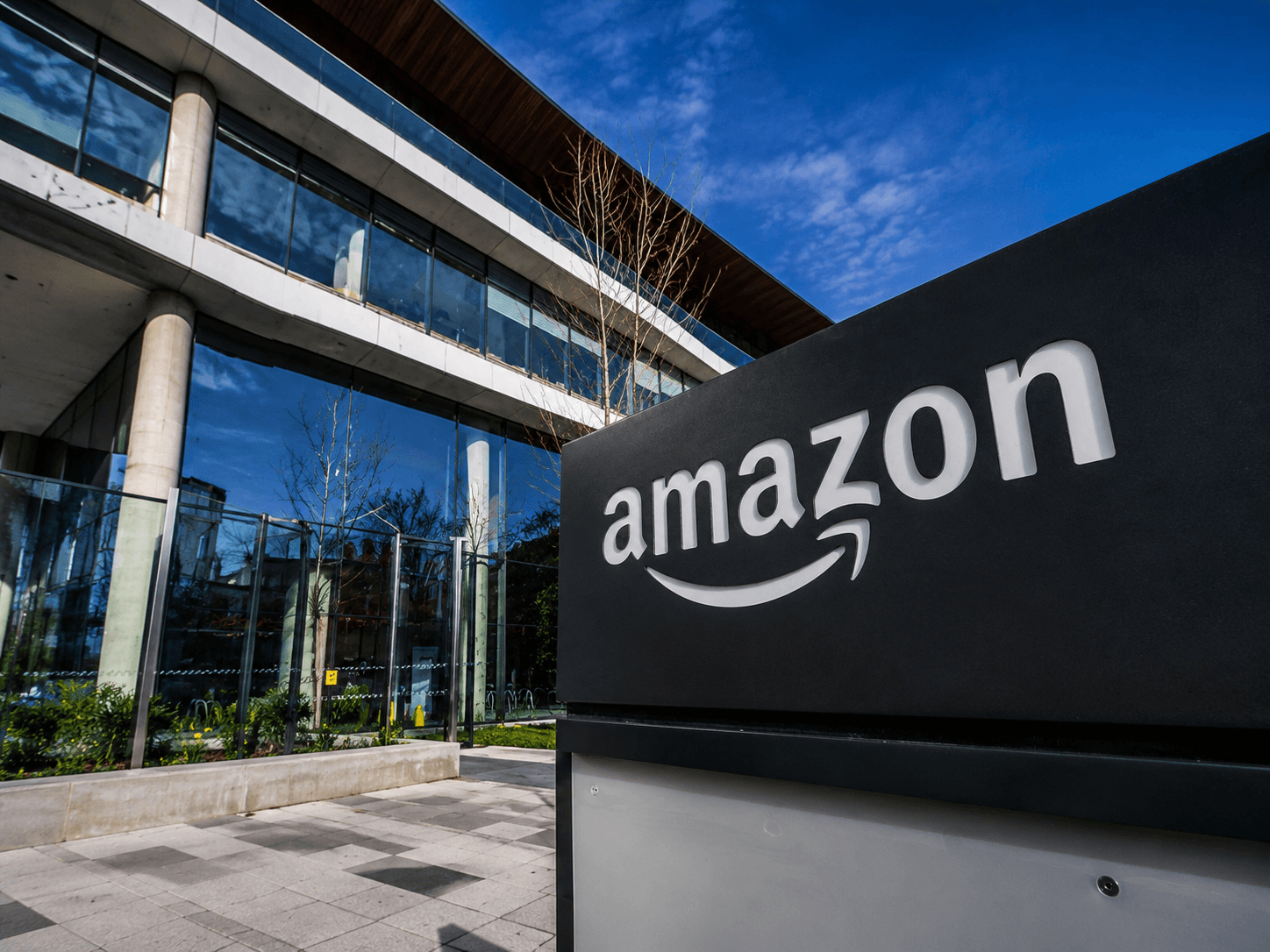
Amazon will stop accepting new customers for Mechanical Turk on July 30, 2026, closing the door on one of the earliest and most influential crowdsourced labor platforms after 21 years of operation. A notice on the Mechanical Turk website confirms the change, and Amazon Web Services says existing customers can continue using the service as normal — but the platform will get no new features, only maintenance.
The wording leaves little ambiguity about direction. AWS said the decision followed "careful consideration," and framed the ongoing investment strictly around security and availability. That is the language of a service being wound down, not one being reinvested in.
“Existing customers can continue to use the service as normal. AWS continues to invest in security and availability improvements for Mechanical Turk, but we do not plan to introduce new features.”— Amazon Web Services, Statement on the Mechanical Turk website
Mechanical Turk launched in 2005 as a marketplace for micro-tasks that computers of the era could not reliably do on their own — solving CAPTCHAs, tagging images, judging sentiment in short pieces of text. The name itself was a joke on an 18th-century chess-playing automaton that was actually operated by a hidden human, and Amazon leaned into the reference: humans doing the work that machines pretended to do.
Key facts
- 01Amazon will stop accepting new Mechanical Turk customers on July 30, 2026, ending new signups after 21 years.
- 02Existing customers keep access, but AWS said it will not add new features — only security and availability fixes.
- 03A 2023 analysis found 33% to 46% of Mechanical Turk workers were using large language models to complete tasks.
- 04Launched in 2005, the platform was rebranded in 2018 as a data-annotation layer for Amazon's SageMaker AI service.
By 2018, Amazon repositioned Mechanical Turk as a data-annotation layer for its SageMaker AI service, giving companies a way to label the training data that neural networks required. That pivot made it a quiet but load-bearing piece of the early machine-learning stack, and it kept the platform relevant through the deep-learning boom.
It also earned Mechanical Turk a reputation as the hidden human layer inside products marketed as AI, a fake-it-till-you-make-it pipeline for startups that needed a working demo before they had a working model. That role generated its share of ethical debate, and the platform made a cameo in the early stages of the Facebook-Cambridge Analytica story, where Turk workers were used to help harvest survey data.
The final irony is that large language models eventually came for Mechanical Turk itself. A 2023 analysis found that between 33% and 46% of workers on the platform were using large language models to complete their assigned tasks — meaning the humans hired to label data for AI were quietly outsourcing the labor back to AI. That undercut the entire value proposition of paying humans to be in the loop.
Reaction on Reddit after the announcement suggested the platform had been fading for a while. One user argued that Mechanical Turk had effectively died "years ago," as workers and researchers abandoned it in the face of bots and fraud, and predicted that someone at Amazon would eventually decide the servers themselves were not worth running.
The economics behind the decision are straightforward. Modern data-labeling operations for frontier AI have moved toward specialized firms with vetted contractor pools — Scale AI, Surge AI, and in-house teams at the frontier labs — which offer higher-quality output and better auditing than an open marketplace. And for the simpler tasks Mechanical Turk originally served, a capable language model can now do the work for a fraction of the cost per task.
The counterweight is that some existing Mechanical Turk customers still rely on the platform for research studies, particularly in academic behavioral science, where the pool of workers has been a standard sampling frame for two decades. Those researchers will keep access under the announcement, but the freeze on new features signals they should be planning migrations rather than expansions.
Mechanical Turk's slow wind-down is a fitting bookend for the pre-LLM era of applied AI. The platform was built on the assumption that certain tasks needed a human because no algorithm could do them cheaply enough — an assumption that held for close to two decades and then collapsed inside 24 months. Amazon is not pulling the plug yet, but with no roadmap and no new customers, the servers are on a countdown clock, and the AI industry has already moved on to the tools that replaced the workers who used to train them.

Working on something we should cover, or seeing a story we missed? Send leads, documents, or feedback to hello@aichatdaily.com. For sensitive tips, see our secure tips page for Signal and PGP options.
Spotted an error? Email hello@aichatdaily.com with the URL and the issue, or read our full corrections policy.